

Petroleum products are materials produced by refining crude oil or processing hydrocarbon streams obtained from natural gas. They include transport fuels, heating fuels, liquefied gases, lubricants, asphalt, waxes, solvents, petroleum coke, and feedstocks used by the chemical industry.
Parsbehinlab provides laboratory testing and quality control services for fuels, lubricants, hydrocarbon solvents, and light and heavy hydrocarbons. These services help refineries, manufacturers, traders, importers, and exporters determine whether petroleum products meet the required technical or commercial specifications.
The types of petroleum products differ greatly in composition and use. Gasoline must provide suitable volatility and combustion performance. Diesel requires controlled ignition quality, viscosity, sulfur, and cold-flow properties. Lubricants must maintain a protective film under specific operating conditions. Asphalt, solvents, liquefied gases, and petrochemical feedstocks have entirely different quality requirements.
This article explains what petroleum products are, how they are classified, and which products are obtained directly or indirectly from crude oil.
What Are Petroleum Products?
What are petroleum products? The U.S. Energy Information Administration defines them as fuels made from crude oil and the hydrocarbons contained in natural gas. It also notes that petroleum products may be produced from other sources, including coal, natural gas, and biomass.
“Petroleum products are fuels made from crude oil and the hydrocarbons contained in natural gas.”
In broader industrial usage, the term may also cover nonfuel refinery outputs such as lubricants, asphalt, waxes, solvents, petroleum coke, and chemical feedstocks.

Crude oil itself is not a finished petroleum product. It is a naturally occurring mixture containing many hydrocarbons, along with sulfur, nitrogen, metals, salts, water, and other constituents. A refinery separates and converts this mixture into materials with more controlled properties.
The basic refining stages are:
- Separation of crude oil into boiling-range fractions
- Conversion of heavy molecules into more useful components
- Treatment to remove or reduce undesirable compounds
- Blending of intermediate streams
- Testing and release of finished products
The U.S. Energy Information Administration describes separation, conversion, and treatment as the three fundamental stages followed by petroleum refineries.
Classification of Petroleum Products
The classification of petroleum products can be based on physical state, boiling range, chemical composition, application, or refinery origin. No single classification is ideal for every commercial or technical purpose.
ISO 8681 provides a general system for defining classes of petroleum products and lubricants. More detailed ISO standards classify individual families, including fuels and liquefied petroleum gases.
For practical use, the main categories can be organized as follows:
| Product category | Common examples | Primary uses |
|---|---|---|
| Gaseous and liquefied products | Propane, butane, LPG, refinery gas | Heating, cooking, fuel blending, chemical production |
| Light transport fuels | Gasoline, aviation gasoline | Road transport, small aircraft |
| Middle distillates | Diesel, heating oil, kerosene, jet fuel | Transport, aviation, heating, power generation |
| Heavy fuels | Residual fuel oil, bunker fuel | Marine engines, boilers, industrial furnaces |
| Lubricants | Base oils, engine oils, hydraulic oils, greases | Friction reduction, cooling, sealing, equipment protection |
| Construction products | Asphalt, bitumen, road oil | Roads, roofing, waterproofing |
| Specialty products | Solvents, white oils, paraffin wax, petroleum jelly | Manufacturing, cosmetics, pharmaceuticals, coatings |
| Solid refinery products | Petroleum coke, sulfur | Industrial fuel, metallurgy, chemical production |
| Petrochemical feedstocks | Naphtha, ethane, propane, aromatics | Plastics, fibers, rubber, resins, chemicals |
This classification of petroleum products helps buyers select the correct specification and laboratory tests. A diesel test package cannot be applied directly to jet fuel, base oil, bitumen, or petroleum coke.
Main Types of Petroleum Products
1. Gasoline
Gasoline is a volatile fuel used mainly in spark-ignition engines. It is blended from several refinery streams rather than being obtained as one pure distillation fraction.
Important properties include octane rating, vapor pressure, sulfur, distillation profile, oxidation stability, and gum content. Gasoline is one of the most familiar examples of petroleum products, but its formulation varies by climate, regulation, and intended market.
2. Diesel Fuel
Diesel belongs to the middle-distillate family and is used in road vehicles, generators, agricultural machinery, ships, and industrial equipment.
Diesel quality may be evaluated through sulfur, cetane number or cetane index, density, viscosity, flash point, distillation, water, sediment, lubricity, and cold-flow properties.
3. Jet Fuel and Kerosene
Jet A and Jet A-1 are aviation turbine fuels produced from kerosene-range refinery streams. They require strict control of freezing point, flash point, thermal stability, cleanliness, water separation, and composition.
General kerosene is also used for heating, lighting, and selected industrial applications, although its specification differs from aviation fuel.
4. Fuel Oil
Fuel oils include light heating fuels and heavier residual products. Heavy fuel oil may require heating before pumping or combustion because of its high viscosity.
Marine and industrial fuel analysis commonly includes viscosity, density, sulfur, water, sediment, ash, carbon residue, and metallic elements.
5. Liquefied Petroleum Gas
LPG primarily consists of propane and butane. These hydrocarbons may be recovered during crude oil refining or natural gas processing.
LPG is used for cooking, heating, industrial burners, vehicle fuel, aerosol propellants, and petrochemical production. ISO recognizes liquefied petroleum gases as a defined family within the broader classification of petroleum fuels.
6. Lubricants and Base Oils
Base oils are refined hydrocarbon materials used to formulate lubricants. Additives are blended with base oils to provide oxidation resistance, corrosion protection, detergency, viscosity control, and other performance characteristics.
Finished products include:
- Engine oil
- Hydraulic oil
- Gear oil
- Turbine oil
- Compressor oil
- Metalworking fluid
- Lubricating grease
These refined petroleum products reduce friction and wear while also supporting cooling, sealing, cleaning, and corrosion prevention.
7. Asphalt and Bitumen
Asphalt and bitumen are heavy hydrocarbon materials used in road construction, roofing, waterproofing, and protective coatings.
Their quality may be assessed through penetration, softening point, ductility, viscosity, flash point, and ageing-related properties. Product terminology and specifications can vary between markets.
8. Solvents and Specialty Fluids
Petroleum solvents include mineral spirits, white spirit, special boiling-point solvents, and selected naphtha grades.
They may be used in paints, adhesives, printing inks, cleaning agents, extraction processes, and chemical formulations. Boiling range, flash point, density, aromatic content, color, and purity are common quality considerations.
9. Petroleum Coke
Petroleum coke is a carbon-rich solid produced during the thermal conversion of heavy refinery residues.
Fuel-grade coke is used in industrial combustion, while selected higher-quality grades may be processed for aluminum production and other specialized applications. Sulfur, metals, ash, moisture, and volatile matter affect its suitability.
10. Paraffin Wax and Petroleum Jelly
Paraffin wax is used in candles, packaging, coatings, polishes, cosmetics, and adhesives. Petroleum jelly is a purified semisolid hydrocarbon mixture used in cosmetics, pharmaceuticals, corrosion protection, and industrial formulations.
These materials are lower-volume but commercially important crude oil derivatives.
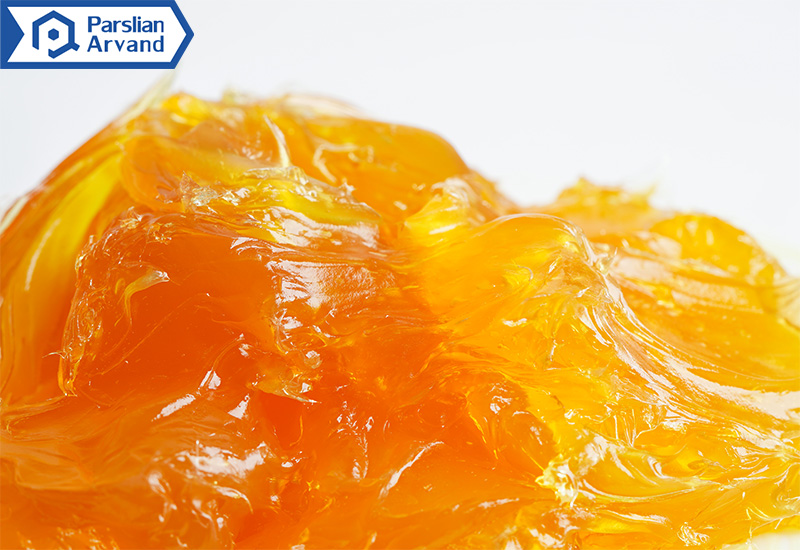
A Practical Petroleum Products List
The following petroleum products list includes major fuels, nonfuel refinery outputs, and specialty materials:
- Gasoline
- Diesel fuel
- Jet fuel
- Kerosene
- Heating oil
- Residual fuel oil
- Marine bunker fuel
- Propane
- Butane
- LPG
- Naphtha
- Base oils
- Lubricating oils
- Greases
- Asphalt and bitumen
- Petroleum coke
- Paraffin wax
- Petroleum jelly
- Hydrocarbon solvents
- White oils
- Sulfur recovered during refining
A complete petroleum products list would be much longer because every major category includes different grades, formulations, and specification levels.
Crude Oil Derivatives and Refined Petroleum Products
The terms crude oil derivatives and refined petroleum products are related but not always interchangeable.
Refined petroleum products are materials manufactured or finished in a refinery. Gasoline, diesel, jet fuel, fuel oil, base oil, asphalt, wax, and petroleum coke are clear examples.
Crude oil derivatives include these refinery outputs but may also include downstream chemicals and materials made from refinery feedstocks. Plastics, synthetic fibers, resins, and synthetic rubber can therefore be described as crude oil derivatives, although they are not direct refinery products.
Crude quality affects the available product mix. Lighter crude generally contains more light hydrocarbons, while heavier crude requires more complex conversion to produce high-value fuels. Sulfur content also influences treatment requirements and final product quality.
Petroleum Products and Petrochemical Products Are Not the Same
A list of petrochemical products should not be presented as though it were simply another petroleum products list.
Petrochemicals are chemicals produced directly or indirectly from petroleum or natural gas processing. They include basic building blocks and downstream materials.
A simplified list of petrochemical products includes:
| Petrochemical group | Examples | Common downstream uses |
|---|---|---|
| Olefins | Ethylene, propylene, butadiene | Plastics, rubber, fibers, detergents |
| Aromatics | Benzene, toluene, xylenes | Resins, solvents, coatings, polymers |
| Polymers | Polyethylene, polypropylene, PVC, polystyrene | Packaging, pipes, appliances, construction |
| Synthetic fibers | Polyester, nylon, acrylic | Clothing, carpets, industrial fabrics |
| Synthetic elastomers | Styrene-butadiene rubber, butyl rubber | Tires, seals, hoses, footwear |
| Intermediates | Ethylene glycol, phenol, styrene | Antifreeze, resins, insulation, plastics |
The U.S. Department of Energy identifies plastics, paints, solvents, synthetic rubber, and automotive components among the products manufactured from petrochemical feedstocks.
Why Petroleum Product Testing Matters
Products with similar appearances can have very different properties. Laboratory testing helps confirm product identity, grade, safety characteristics, and compliance.
Depending on the material, testing may include:
- Density and API gravity
- Viscosity
- Sulfur
- Water and sediment
- Flash point
- Distillation behavior
- Pour point
- Ash and carbon residue
- Hydrocarbon composition
- Additives and metallic elements
Pars behin lab operates a petroleum products laboratory supporting quality control for fuels, lubricants, solvents, and hydrocarbon materials. The company began operating in 2007 and reports ISO/IEC 17025 accreditation in petroleum product testing.
Testing can support production control, supplier approval, import and export assessment, cargo inspection, dispute investigation, and release of finished petroleum products.
Frequently Asked Questions for petroleum products
What Are Petroleum Products?
Petroleum products are fuels and other materials produced from crude oil, natural-gas hydrocarbons, or related feedstocks. They include gasoline, diesel, jet fuel, LPG, lubricants, asphalt, solvents, waxes, and petroleum coke.
What Are the Main Types of Petroleum Products?
The main types of petroleum products include gases, light fuels, middle distillates, heavy fuels, lubricants, construction materials, specialty fluids, solids, and chemical feedstocks.
What Are Common Examples of Petroleum Products?
Common examples of petroleum products include gasoline, diesel, jet fuel, kerosene, LPG, engine oil, hydraulic oil, asphalt, petroleum coke, paraffin wax, and hydrocarbon solvents.
What Is the Difference Between Crude Oil and Petroleum Products?
Crude oil is an unprocessed natural hydrocarbon mixture. Petroleum products are usable materials obtained after separation, conversion, treatment, blending, and quality control.
Are Plastics Refined Petroleum Products?
No. Plastics are generally petrochemical products made from chemical feedstocks obtained from petroleum or natural gas. They are downstream crude oil derivatives rather than direct refined petroleum products.
Why Is a List of Petrochemical Products Different?
A list of petrochemical products focuses on chemicals and materials such as ethylene, propylene, benzene, polymers, synthetic rubber, and fibers. A petroleum products list primarily covers refinery outputs such as fuels, lubricants, asphalt, wax, and coke.