
A reliable petroleum laboratory is more than a facility that measures samples. It is a technical decision point for refineries, exporters, importers, traders, inspection companies, lubricant manufacturers, storage operators, and industrial buyers. Its results may influence cargo acceptance, customs clearance, production control, equipment protection, contract settlement, and commercial risk.
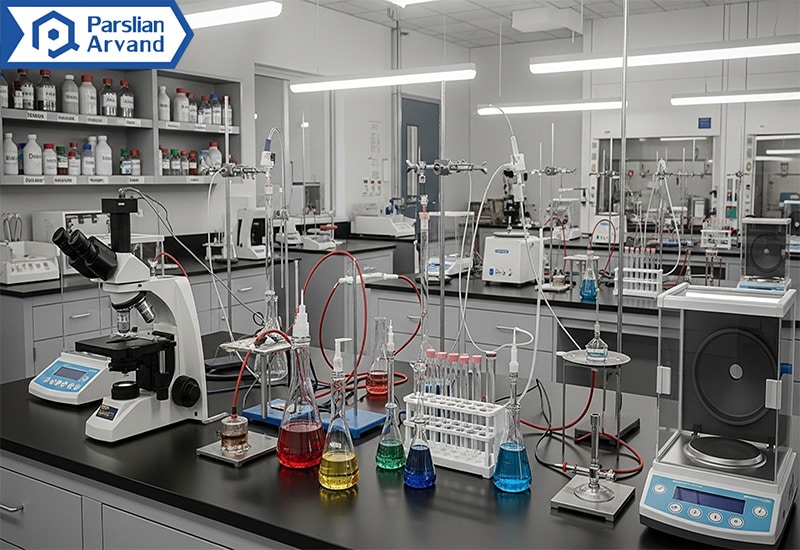
Parslian Arvand provides accredited testing and quality control support for petroleum products through specialized instrumentation, experienced personnel, documented sample handling, and recognized methods. The company began laboratory operations in 2007, works as a certified partner laboratory of the National Standard Organization of Iran, and operates several branches. Its Tehran laboratory covers petroleum products, lubricants, hydrocarbon solvents, and fuels.
For organizations seeking a petroleum testing lab that understands technical requirements and transaction deadlines, the objective is clear: accurate, traceable results that are relevant to the specification and usable by every party involved.
Petroleum Products Testing Laboratory for Commercial Decisions
Petroleum products pass through a complex chain. A batch may move from a refinery to a terminal, from a trader to an inspection company, and from a port to an overseas buyer. At each stage, the product may need evaluation against contractual, regulatory, or operational requirements.
A professional petroleum testing laboratory helps determine whether a sample conforms to the agreed specification. Depending on the product, petroleum products analysis may involve density, viscosity, sulfur, water, distillation behavior, flash point, hydrocarbon composition, additive elements, volatility, foaming tendency, or low temperature performance.
This is why petroleum testing laboratory services should not be reduced to a list of instruments. The actual service is the conversion of a representative sample into defensible technical information.
A capable petroleum laboratory should help answer questions such as:
- Does the cargo meet the sales specification?
- Is the imported fuel compliant with the required standard?
- Has a lubricant retained the required viscosity and performance properties?
- Is a hydrocarbon solvent consistent with its declared grade?
- Are sulfur, water, volatility, and composition values acceptable for release?
- Can the result be reviewed by a buyer, regulator, customs authority, refinery, or inspection body?
Parslian Arvand uses a structured workflow for sample acceptance, testing, technical review, and reporting. The company states that samples are received, coded, registered, assigned to relevant experts, reviewed by technical management, and released through a final result process.
Why ISO/IEC 17025 Accreditation Matters
ISO/IEC 17025 is the international standard for the competence, impartiality, and consistent operation of testing and calibration laboratories. It addresses the conditions that allow a laboratory to produce technically valid and reliable results.
ISO/IEC 17025 enables laboratories to demonstrate that they operate competently and generate valid results.
When a buyer searches for an ISO 17025-accredited petroleum lab, the underlying need is confidence. The client wants evidence that personnel competence, equipment control, method implementation, records, technical review, and quality processes are managed within a recognized framework.
Parslian Arvand reports ISO/IEC 17025 accreditation for petroleum products testing and identifies the Tehran branch as serving light and heavy hydrocarbons, fuels, lubricants, grease, and related products.
An ISO 17025-accredited petroleum lab can support export documentation, import evaluation, refinery batch release, independent inspection, supplier qualification, commercial settlement, and investigation of off specification products.
Accreditation must always be read together with the laboratory scope. Before ordering, confirm that the required product, property, and method are included in the current accredited scope.
ASTM Petroleum Testing and Correct Use of Standards
ASTM International develops widely used technical standards for petroleum products, liquid fuels, and lubricants. These standards allow laboratories and commercial parties to test a product through a common procedure.
ASTM petroleum testing may cover kinematic viscosity, density, distillation range, flash point, sulfur, water, cold cranking performance, evaporation loss, and foaming. The correct method depends on the product, expected range, specification, and intended use of the result.
The phrase ASTM certified petroleum testing lab is often used by buyers, but it needs clarification. ASTM primarily publishes standards and test methods, while the competence and consistent operation of a testing laboratory are commonly demonstrated through ISO/IEC 17025 accreditation. A more accurate description is an ISO/IEC 17025-accredited laboratory that performs ASTM petroleum testing within its approved capabilities.
When evaluating an ASTM certified petroleum testing lab, ask whether it can identify the exact method, confirm suitability for the sample matrix, state whether the method is within its accredited scope, and report any deviation clearly.
Petroleum Products Analysis Capabilities
Parslian Arvand lists coverage for gasoline engine oils, diesel engine oils, hydraulic oils, base oils, gear oils, industrial oils, turbine oils, paraffin, light and heavy hydrocarbons, naphtha, kerosene, gasoline, distillate fuels, fuel oil, diesel fuel, jet fuel, solvents, thinners, soluble bitumen, and grease.
| Product or analysis area | Typical properties or techniques | Business purpose |
|---|---|---|
| Gasoline, diesel, jet fuel, and distillates | Density, sulfur, water, distillation, flash point, composition | Specification verification, release, import, export, and trading |
| Engine, hydraulic, gear, turbine, and industrial oils | Viscosity, additive elements, water, foaming, volatility, low temperature behavior | Qualification, production control, procurement, and condition monitoring |
| Naphtha, solvents, and light hydrocarbons | Gas chromatography, purity, boiling range, aromatic and olefin content | Grade identification, purity confirmation, and contract compliance |
| Heavy hydrocarbons and fuel oil | Density, viscosity, sulfur, water, flash point, distillation | Cargo evaluation, blending control, handling, and settlement |
| In service lubricants | FTIR condition monitoring, viscosity, contamination indicators, selected elements | Maintenance planning and detection of oil degradation |
The published capabilities include SVM measurement of viscosity, density, and viscosity index; gas chromatography for detailed hydrocarbon analysis and solvent purity; PONA analysis; ICP measurement of lubricant additive elements; Noack and foaming tests; total sulfur and mercaptan analysis; atmospheric and vacuum distillation; FTIR condition monitoring; Karl Fischer coulometric water measurement; and cold cranking simulator testing.
Not every sample requires every test. Effective petroleum products analysis begins with product identity, governing specification, contractual limits, sampling history, and purpose.
Petroleum Testing Services for B2B Clients
1.Petroleum Laboratory for Export
A petroleum laboratory for export helps sellers demonstrate conformity before loading, shipment, or document submission. Export work may require testing against a contract specification, destination requirement, buyer-nominated method, or certificate format.
Early petroleum quality testing reduces the risk of discovering a nonconformity after logistics costs have been incurred. A petroleum laboratory for export can support pre-shipment evaluation, batch comparison, retained sample analysis, and technical review when buyer and seller data differ.
Parslian Arvand states that its services support export, import, and domestic production through accredited testing.
2.Petroleum Testing for Import
Petroleum testing for import may verify identity, grade, regulatory compliance, or conformity with purchase conditions. Importers need a clear test plan because required parameters vary by product and customs classification.
A qualified fuel testing laboratory can examine gasoline, diesel, kerosene, jet fuel, fuel oil, and related hydrocarbons. Petroleum testing for import should be coordinated with the applicable authority, inspection company, and contract to avoid missing a mandatory parameter.
3.Petroleum Laboratory for Refinery Operations
A petroleum laboratory for refinery clients can support feed assessment, intermediate stream monitoring, final product release, blending verification, troubleshooting, and comparison with external results.
Independent work is valuable when a refinery requires confirmation outside its production laboratory. A petroleum laboratory for refinery work should distinguish routine process control from independent conformity assessment. Parslian Arvand offers petroleum testing services
for fuels, hydrocarbons, oils, grease, and solvents, making its capabilities relevant to refinery quality control and supplier verification.
4.Petroleum Testing for Trading Companies
Petroleum testing for trading companies is closely linked to financial risk. Differences in density, sulfur, water, distillation behavior, or purity can affect acceptance, pricing, blending, and claims.
An independent oil testing laboratory provides a neutral analytical reference when buyers and sellers need third-party evidence. Petroleum testing for trading companies can be arranged before purchase, before loading, at destination, during a dispute, or for routine supplier qualification.
The most useful report is not always the longest. It is the report that tests the correct parameters, applies agreed methods, identifies the sample clearly, and arrives within the commercial decision window.
5.Petroleum Laboratory for Inspection Companies
A petroleum laboratory for inspection companies must follow disciplined sample custody and communication procedures. Inspection businesses may submit samples collected from tanks, vessels, trucks, drums, production lines, or storage facilities.
Parslian Arvand provides inspection and sampling services in addition to specialized testing, allowing coordinated field and laboratory activities subject to location and project scope.
A petroleum laboratory for inspection companies can support cargo verification, certificate preparation, cross-checking, and dispute analysis. Before work begins, confirm turnaround time, reporting language, method edition, decision rules, and sample retention requirements.

Choosing an Independent Oil Testing Laboratory
An independent oil testing laboratory adds value when results must be separate from the producer, seller, or buyer. Independence matters in disputes, supplier approval, tender evaluation, import control, and verification of refinery or terminal data.
The best petroleum testing laboratories protect result integrity through controlled sample receipt, suitable method selection, competent execution, technical review, and transparent reporting. Clients comparing petroleum testing laboratories or broader oil and gas laboratories should assess:
- Accreditation and current scope
- Experience with the product
- Availability of the required ASTM or ISO method
- Sample quantity and container requirements
- Turnaround time
- Reporting format and language
- Retained sample policy
- Confidentiality
- Sampling and inspection support
The term oil and gas laboratories covers many disciplines, from upstream reservoir studies to downstream fuel and lubricant testing. Buyers should select a petroleum analysis laboratory whose published scope matches the actual product and decision.
Fuel Testing Laboratory Services
A fuel testing laboratory evaluates properties affecting safety, combustion, storage, handling, emissions performance, and specification compliance. The program depends on whether the sample is gasoline, diesel, jet fuel, kerosene, fuel oil, or another distillate.
Typical assignments include density and distillation testing, sulfur and water measurement, flash point assessment, composition analysis, product grade confirmation, comparison of supplier and receiver samples, and investigation of contamination or mixing.
Fuel testing must begin with a defined specification. A result cannot be judged acceptable or unacceptable without limits, an applicable method, and an agreed decision basis.
Petroleum Products Quality Control Services for Lubricants
Lubricant performance depends on base oil quality, viscosity behavior, additive chemistry, contamination, volatility, foaming tendency, and low-temperature properties.
Parslian Arvand lists capabilities for engine oils, hydraulic oils, gear oils, turbine oils, industrial oils, base oils, and grease. It also identifies ICP, FTIR, Karl Fischer, CCS, Noack, foam testing, viscosity measurement, and corrosion-related testing.
Petroleum products quality control services may support raw material approval, blend verification, finished product release, supplier qualification, storage investigation, condition monitoring, and complaint analysis.
A petroleum analysis laboratory should select methods according to the lubricant type and performance claim. Engine oil, hydraulic fluid, turbine oil, and gear oil cannot be evaluated through one universal package.
Sample Submission and Reporting
A well-managed petroleum testing lab uses a controlled workflow. Parslian Arvand describes sample receipt and coding, assignment to a specialist, test execution, technical review, and delivery of the final result.
For an efficient quotation, provide:
- Product name and grade
- Source and sample identification
- Required methods and specification limits
- Purpose of testing
- Reporting language
- Requested turnaround time
- Sampling and seal information
- Customs, contract, or inspection reference
Before shipping, confirm sample volume, container type, preservation, transport restrictions, and current accredited scope.
What Does Core Lab Petroleum Services Mean?
The term core lab petroleum services can describe different needs. In upstream work, it often refers to geological core analysis and reservoir rock properties. Some downstream buyers use core lab petroleum services more broadly when searching for a central laboratory for essential petroleum analysis.
Parslian Arvand focuses on petroleum products, fuels, lubricants, hydrocarbon solvents, and related quality control. Clients seeking geological reservoir core analysis should confirm availability separately. This distinction is important because oil and gas laboratories may have very different technical scopes.
Why Choose Parslian Arvand?
Parslian Arvand supports businesses that need technically sound petroleum testing laboratory services and clear communication throughout the process.
Key advantages include:
- Experience as a partner laboratory of the National Standard Organization of Iran
- ISO/IEC 17025 accreditation for petroleum testing activities
- Coverage of fuels, hydrocarbons, lubricants, solvents, grease, and related products
- Specialized instruments including GC, ICP, FTIR, Karl Fischer, CCS, and SVM systems
- Support for export, import, refinery, trading, inspection, and domestic production
- Structured sample acceptance and technical review
- Access to sampling, inspection, training, and specialized laboratory services
For companies seeking petroleum products quality control services, the first step is to define the decision the test must support.
Request Petroleum Quality Testing
To request petroleum quality testing, prepare the product specification, sample details, required methods, and reporting deadline. The technical team can then review feasibility, sample quantity, test selection, and expected delivery.
Whether the assignment requires an independent oil testing laboratory, a petroleum laboratory for export, a refinery program, or routine supplier verification, clear instructions improve technical and commercial outcomes.
Contact Parslian Arvand for petroleum testing services tailored to fuels, hydrocarbons, lubricants, solvents, and industrial petroleum products.
Frequently Asked Questions
What does a petroleum products testing laboratory test?
A petroleum products testing laboratory may test fuels, lubricants, hydrocarbons, solvents, grease, paraffin, naphtha, kerosene, gasoline, diesel, jet fuel, and fuel oil. Depending on the product, properties may include density, viscosity, sulfur, water, flash point, distillation, composition, additive elements, volatility, foaming, and low temperature behavior.
Is Parslian Arvand an ISO 17025 accredited petroleum lab?
Parslian Arvand states that its petroleum laboratory holds ISO/IEC 17025 accreditation for petroleum products testing. Clients should request the current certificate and scope to confirm that the required method and product are covered.
Is ASTM certified petroleum testing lab the correct term?
Not exactly. ASTM develops methods and standards, while laboratory competence is commonly demonstrated through ISO/IEC 17025 accreditation. The accurate requirement is usually an accredited petroleum testing laboratory that performs the relevant ASTM petroleum testing method within its competence and, where required, accredited scope.
Can the laboratory support petroleum testing for import and export?
Yes. The company presents its services as supporting both. A petroleum laboratory for export can test against buyer or destination requirements, while petroleum testing for import can support identification, conformity, inspection, and customs related processes.
Does the laboratory work with refineries and traders?
The available scope is relevant to a petroleum laboratory for refinery quality control and to petroleum testing for trading companies. Each project should be defined by product, specification, method, sample origin, and reporting deadline.
Can inspection companies submit samples?
Yes. The company lists specialized testing, inspection, and sampling services. A petroleum laboratory for inspection companies can coordinate laboratory work with defined custody, identification, reporting, and project requirements.
How should I compare petroleum testing laboratories?
Compare accreditation scope, product experience, method availability, turnaround time, sample handling, technical review, reporting format, confidentiality, and support for the intended commercial or regulatory decision.
What information is needed for a quotation?
Provide the sample type, grade, number of samples, test parameters, preferred ASTM or ISO methods, limits, reporting language, purpose, and completion date. This allows the petroleum testing laboratory to prepare an accurate proposal.