

Petroleum products used in everyday life are far more common than most people realize. Fuel is the most visible use of crude oil, but petroleum also supplies chemical feedstocks for packaging, clothing, construction materials, electronics, personal care products, medical equipment, and household goods.
Parsbehin lab provides laboratory testing and quality control services for fuels, lubricants, hydrocarbon solvents, light and heavy hydrocarbons, and related petroleum materials. These services help manufacturers, traders, importers, and exporters verify raw materials and finished products before commercial release or industrial use.
This article explains 25 petroleum products used in everyday life and the material connection behind each one. Some are direct refinery products, such as petroleum jelly and paraffin wax. Most, however, are manufactured farther downstream from petrochemicals such as ethylene, propylene, benzene, and toluene.
The U.S. Energy Information Administration identifies petroleum as a source of feedstocks for chemicals, plastics, and synthetic materials used throughout modern life. The U.S. Department of Energy also notes:
“Petrochemicals derived from oil and natural gas make the manufacturing of over 6,000 everyday products and high tech devices possible.”
Source: U.S. Department of Energy
Why Petroleum Products Used in Everyday Life Are Easy to Overlook
Many things made from oil do not look like petroleum products. Crude oil is first refined into fuels, gases, naphtha, lubricants, waxes, asphalt, and other streams. Petrochemical facilities then convert selected streams into chemical building blocks. Manufacturers use those chemicals to produce polymers, synthetic rubber, fibers, foams, resins, solvents, surfactants, and additives.
This distinction matters when discussing Petroleum products in daily life. A plastic bottle is not a direct refinery product in the same sense as diesel. It is a downstream manufactured item made from a polymer whose feedstock may have originated from crude oil or natural gas.
A Practical Petroleum-Based Products List
The following table summarizes the main product groups covered in this petroleum-based products list.
| Product group | Common examples | Typical petroleum connection |
| Packaging and storage | Bottles, food containers, trash bags, storage boxes, and adhesive tape | Polyethylene, polypropylene, PET, polystyrene, and synthetic adhesive resins |
| Clothing and furnishings | Synthetic fabrics, footwear, upholstery, mattresses, and cushions | Polyester, nylon, acrylic fibers, synthetic rubber, and polyurethane foam |
| Construction materials | Pipes, flooring, roofing, insulation, paints, and coatings | PVC, bitumen, polyurethane, polystyrene, solvents, and synthetic resins |
| Vehicles and electronics | Tires, dashboards, device housings, helmets, and cable coatings | Synthetic rubber, engineering plastics, polyurethane, PVC, and insulation polymers |
| Personal and household goods | Toothbrushes, shampoo packaging, optical lenses, petroleum jelly, and crayons | Nylon, molded plastics, surfactants, polycarbonate, refined hydrocarbons, and paraffin wax |
25 Everyday Products Made From Petroleum
Packaging and Storage
1. Plastic Bottles
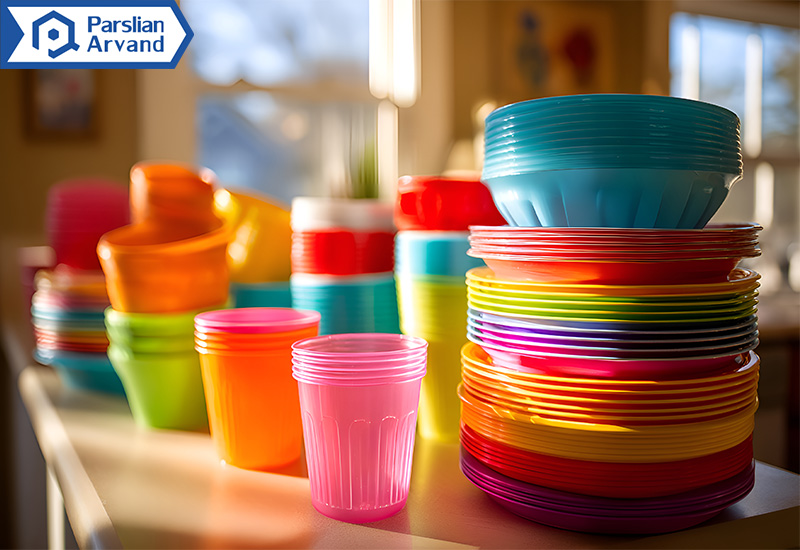
Many beverage, detergent, cosmetic, and household bottles are made from PET or high density polyethylene. These polymers are lightweight, resistant to moisture, and suitable for high volume manufacturing.
2. Food Containers
Takeaway boxes, reusable containers, lids, and flexible packaging commonly use polypropylene, polyethylene, or polystyrene. The material is selected according to temperature resistance, rigidity, sealing, and food contact requirements.
3. Trash Bags
Most conventional trash bags are made from polyethylene. Different resin grades and film thicknesses allow manufacturers to control flexibility, puncture resistance, and load capacity.
4. Transparent Adhesive Tape
Adhesive tape combines a polymer backing with a pressure sensitive adhesive. Both the film and adhesive may contain petroleum derived polymers and synthetic resins.
5. Plastic Storage Boxes
Kitchen organizers, toolboxes, document boxes, and industrial containers often use polypropylene or other durable plastics because they resist moisture and repeated handling.
Clothing and Furnishings
6. Synthetic Clothing
Polyester, nylon, acrylic, and elastane are common in sportswear, jackets, socks, and blended fabrics. These synthetic fibers are manufactured from chemical intermediates rather than being spun directly from crude oil.
7. Shoe Soles
Many shoe soles contain synthetic rubber, polyurethane, or ethylene vinyl acetate foam. These materials help control grip, flexibility, weight, cushioning, and wear resistance.
8. Foam Mattresses
Polyurethane foam is widely used in mattresses, pillows, furniture, and vehicle seats. Manufacturers can adjust its density and cell structure to provide different levels of support and resilience.
9. Upholstery
Synthetic upholstery may include polyester fibers, polyurethane coatings, artificial leather, or foam backing. These materials can improve durability, stain resistance, and ease of cleaning.
10. Umbrellas
Many umbrellas contain nylon or polyester fabric, polymer coatings, plastic handles, and molded components. The complete product is not made only from petroleum, but several major parts often are.
Building and Home Improvement Materials
11. PVC Pipes
Polyvinyl chloride is used in drainage, water, conduit, and industrial piping. Its final performance depends on resin quality, stabilizers, fillers, and manufacturing conditions.
12. Vinyl Flooring
Vinyl flooring typically contains PVC resin, fillers, pigments, stabilizers, and protective layers. It is widely used because it is water resistant and comparatively easy to maintain.
13. Roofing Materials
Asphalt shingles and bituminous roofing products contain heavy petroleum materials combined with reinforcing and mineral layers. Some roofing membranes also use synthetic polymers.
14. Paints and Varnishes
Many coatings contain petroleum derived solvents, resins, binders, or additives. Water based alternatives are common, but their formulations may still include synthetic polymers produced from petrochemical feedstocks.
15. Insulation Foam
Polyurethane and polystyrene foams are used in walls, roofs, refrigerators, and building panels. Their structure helps reduce heat transfer while keeping the material relatively light.

Vehicles, Safety Equipment, and Electronics
16. Vehicle Tires
Modern tires contain natural rubber, synthetic rubber, carbon black, processing oils, reinforcing materials, and additives. Synthetic rubber and several processing components are commonly linked to petroleum feedstocks.
17. Car Dashboards
Dashboards, door panels, consoles, seat foam, seals, and interior trim may contain polypropylene, polyurethane, PVC, synthetic rubber, and other engineering materials.
18. Safety Helmets
Bicycle, sports, and construction helmets may use polycarbonate, ABS plastic, expanded polystyrene, and synthetic padding. Each layer is designed to perform a different protective function.
19. Computer and Phone Housings
Electronic device housings often use engineering plastics selected for impact resistance, heat performance, electrical safety, and precise molding.
20. Electrical Cable Insulation
PVC, polyethylene, and synthetic rubber are commonly used around electrical wires and communication cables. The insulation protects conductors from moisture, contact, abrasion, and chemical exposure.
Personal and Household Products
21. Toothbrushes
Most toothbrushes combine a molded plastic handle with nylon bristles. Some newer models use bamboo or bio based plastics, but conventional designs remain heavily dependent on petrochemical polymers.
22. Shampoo and Cosmetic Packaging
Shampoo formulas may contain synthetic surfactants or fragrance carriers, while bottles, pumps, caps, and labels commonly use petroleum derived plastics. The exact composition varies by manufacturer.
23. Petroleum Jelly
Petroleum jelly is a refined semisolid mixture of hydrocarbons. It is used in skin care, cosmetics, pharmaceutical preparations, corrosion protection, and some industrial applications.
24. Eyeglass Lenses
Many modern lenses are made from polycarbonate or other optical polymers instead of glass. These materials can provide lower weight and higher impact resistance.
25. Crayons
Many conventional crayons contain paraffin wax obtained during petroleum refining. The wax is blended with pigments and other ingredients to produce the required color and texture.
Uses of Petroleum in Everyday Life Beyond Fuel
The Uses of petroleum in everyday life can be divided into three broad categories:
- Energy products used for transport, heating, power generation, and industrial operations
- Direct refinery products such as lubricants, asphalt, waxes, solvents, and petroleum coke
- Petrochemical feedstocks used to manufacture plastics, fibers, rubber, resins, coatings, and foams
The third category explains why Petroleum products in daily life are often difficult to recognize. The connection to crude oil may be several manufacturing stages away from the final product.
It is also important not to assume that every item in a List of petroleum products used in everyday life is always petroleum derived. Manufacturers may use natural rubber, mineral fillers, recycled polymers, biomass based materials, glass, metals, or alternative chemical feedstocks. Technical documentation or laboratory analysis is needed when the exact composition matters.
How Parsbehin lab Supports Product Quality Control
Parsbehinlab provides testing services for petroleum products, lubricants, hydrocarbon solvents, and related materials. Depending on the product and requested method, laboratory work may include density, viscosity, sulfur, water, flash point, distillation behavior, composition, or selected contaminants.
For companies that manufacture, trade, or inspect petroleum products used in everyday life, laboratory verification can support:
- Raw material identification
- Supplier qualification
- Production quality control
- Import and export assessment
- Investigation of contamination or specification failure
- Independent verification during commercial transactions
Testing is especially important when materials appear similar but have different grades, compositions, safety properties, or intended applications.
Frequently Asked Questions for petroleum products used in everyday life
What Are the Most Common Petroleum Products Used in Everyday Life?
Common examples include plastic packaging, synthetic clothing, tires, foam mattresses, paints, PVC pipes, vinyl flooring, cable insulation, toothbrushes, optical lenses, crayons, and petroleum jelly. These are among the most familiar everyday products made from petroleum or petroleum derived feedstocks.
Are All Things Made From Oil Entirely Petroleum Based?
No. Many things made from oil also contain metals, minerals, pigments, natural fibers, glass, wood, or renewable materials. Petroleum may supply only one component, coating, resin, adhesive, or polymer.
What Is the Difference Between Petroleum and Petrochemical Products?
Petroleum products include refinery outputs such as fuels, lubricants, waxes, asphalt, and solvents. Petrochemical products are made by chemically converting hydrocarbon feedstocks into materials such as plastics, synthetic fibers, rubber, resins, and surfactants.
Why Are There So Many Uses of Petroleum in Everyday Life?
Hydrocarbons can be converted into versatile chemical building blocks. Manufacturers can tailor the resulting materials for strength, flexibility, insulation, transparency, adhesion, chemical resistance, and low weight.
Is This a Complete Petroleum-Based Products List?
No. This petroleum-based products list contains 25 familiar examples. Thousands of industrial, household, medical, construction, and electronic products may contain petroleum or natural gas derived materials.
Where Can I Find a List of Petroleum Products Used in Everyday Life?
The 25 examples above form a practical List of petroleum products used in everyday life. A broader list would also include adhesives, sealants, detergents, medical equipment, sports products, printing inks, fertilizers, industrial chemicals, and numerous electronic components.