
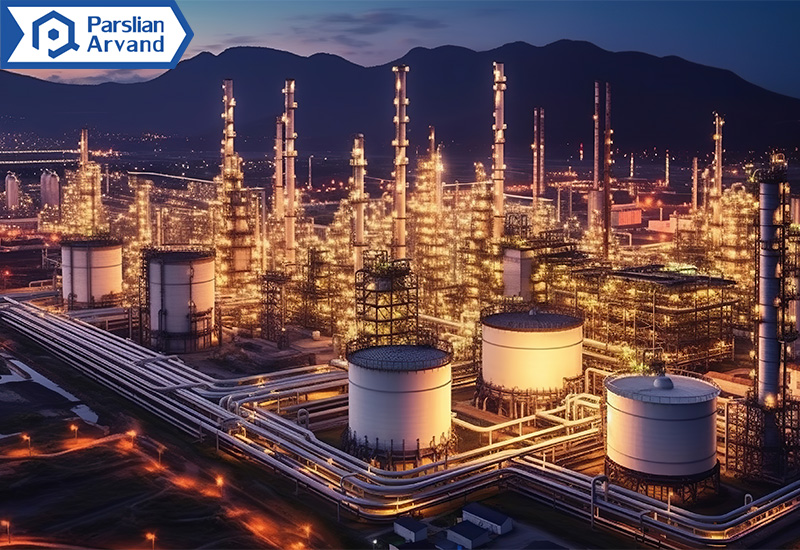
Crude oil refining turns a complex hydrocarbon mixture into controlled products such as gasoline, diesel, jet fuel, liquefied petroleum gases, lubricants, asphalt, and petrochemical feedstocks. It combines separation, molecular conversion, contaminant removal, blending, and laboratory verification.
Parsbehinlab supports petroleum product quality control through laboratory analysis of fuels, lubricants, light and heavy hydrocarbons, and related materials. Understanding the crude oil refining process explains why laboratories measure density, viscosity, sulfur, water, distillation behavior, flash point, composition, and selected metals before release. Pars behin laboratory states that its Tehran petroleum laboratory was established to support quality control of oil export products and holds ISO/IEC 17025 accreditation for petroleum product testing.
How Is Crude Oil Refined?
The simple answer to “how is crude oil refined?” is that the crude is first separated into boiling-range fractions. The less valuable fractions are then converted into more useful molecules, treated to remove undesirable compounds, and blended into finished products.
The U.S. Energy Information Administration summarizes the overall logic clearly:
“All refineries follow three basic steps: separation, conversion, and treatment.”
In practice, the oil refinery process steps also include feed preparation, product blending, testing, storage, and distribution. The exact configuration varies. A complex Crude oil refinery may include catalytic cracking, hydrocracking, reforming, alkylation, coking, sulfur recovery, and hydrogen-based units.
Crude quality, especially density and sulfur content, influences the processing route and the amount of upgrading required.
Main Oil Refinery Process Steps
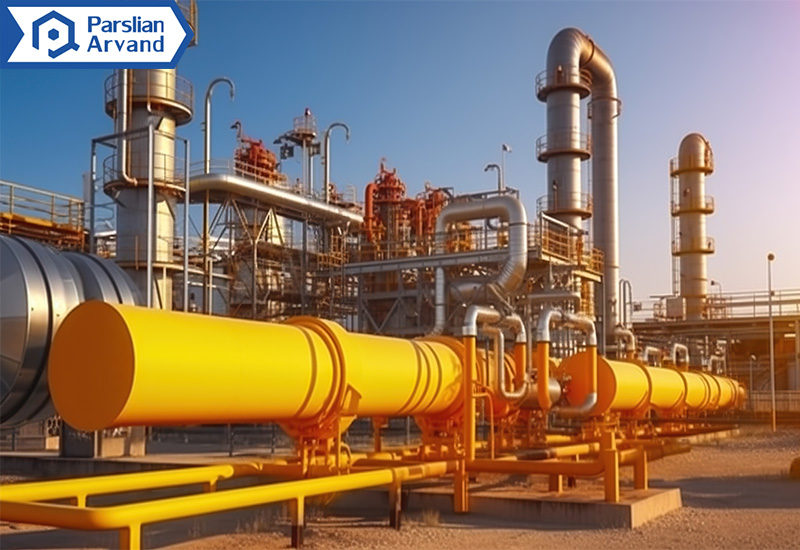
The following sequence describes a typical crude oil refining process. Individual refineries may combine units differently, but the technical purpose of each stage remains broadly similar.
- Crude receipt, storage, and preliminary testing
- Desalting and dehydration
- Atmospheric distillation
- Vacuum distillation
- Conversion of heavy fractions
- Treatment and impurity removal
- Blending and product formulation
- Laboratory quality control and storage
| Refinery stage | Main purpose | Typical streams or products |
| Feed preparation | Remove water, salts, and suspended matter | Desalted crude |
| Atmospheric distillation | Separate crude by boiling range | Gas, naphtha, kerosene, gas oil, residue |
| Vacuum distillation | Recover valuable material from atmospheric residue | Vacuum gas oil, vacuum residue |
| Conversion | Break or rearrange hydrocarbon molecules | Gasoline components, diesel, jet range material, LPG |
| Treatment | Reduce sulfur, nitrogen, metals, and unstable compounds | Cleaner intermediate streams |
| Blending | Combine streams to meet finished product specifications | Gasoline, diesel, jet fuel, fuel oil |
| Quality control | Verify conformity before release | Approved or corrected product batches |
Step 1: Crude Receipt and Feed Characterization
Before processing begins, crude oil is received into refinery storage tanks and evaluated. A refinery needs to know whether the crude is light or heavy, sweet or sour, and whether it contains significant water, sediment, salts, sulfur, or metals.
These properties influence corrosion, furnace operation, catalyst life, product yield, and downstream processing. These factors are essential considerations in crude oil refining. A change in feedstock can alter the entire crude oil refining plan.
Laboratory characterization may include API gravity, sulfur, water and sediment, salt, viscosity, acidity, and distillation behavior. The aim is to predict how the feed will behave inside the Crude oil refinery.
Step 2: Desalting and Dehydration
Crude normally contains some water and inorganic salts. If these materials enter high-temperature units, they may contribute to fouling, corrosion, deposits, and operational instability.
During desalting, crude is mixed with wash water so dissolved salts move into the water phase. An electrostatic field helps the droplets combine and separate from the oil.
Desalting does not create a finished product. Instead, it prepares the feed for crude oil refining and protects downstream equipment. It protects the equipment used in later oil refinery process steps and reduces the burden on atmospheric distillation and downstream treatment units.
Step 3: Fractional Distillation of Crude Oil
Fractional distillation of crude oil is the primary separation stage. The desalted crude is heated in a furnace and sent to an atmospheric distillation column. Inside the column, components separate according to their boiling ranges.
Lighter vapors rise higher before condensing. Middle fractions are withdrawn from intermediate sections. Heavy gas oils leave lower in the tower, while the highest boiling material remains as atmospheric residue at the bottom.
The EIA describes this arrangement as light fractions near the top, medium liquids in the middle, and heavier fractions lower in the column.
Typical atmospheric fractions include:
- Refinery gas and liquefied petroleum gas components
- Light and heavy naphtha
- Kerosene range material
- Straight run diesel or gas oil
- Heavy atmospheric gas oil
- Atmospheric residue
Fractional distillation of crude oil does not isolate single pure compounds. Each cut still contains many hydrocarbons with overlapping boiling behavior. Most streams therefore require additional treatment or conversion.
Step 4: Vacuum Distillation
Atmospheric residue contains valuable heavy hydrocarbons, but heating it further at atmospheric pressure could promote unwanted thermal decomposition. Vacuum distillation lowers the operating pressure, allowing additional fractions to vaporize at lower effective boiling temperatures.
The principal products are usually light and heavy vacuum gas oils and a very heavy vacuum residue. Vacuum gas oil can be sent to catalytic cracking or hydrocracking. Vacuum residue may be processed in a coker, used in asphalt production, sent to other residue upgrading units, or incorporated into fuel oil where specifications permit.
This shows why the answer to “how is crude oil refined?” cannot stop at atmospheric distillation. Separation creates intermediates, not automatically finished fuels.
Step 5: Converting Heavy Fractions into Lighter Products
A refinery would produce too much heavy material and too little transport fuel if it relied on distillation alone. Conversion units change the molecular structure of refinery streams.
Fluid catalytic cracking uses heat and a catalyst to turn heavy gas oil into lighter products. Hydrocracking uses hydrogen and catalysts to produce diesel, jet fuel components, and naphtha from heavier feeds.
EIA defines catalytic cracking as the conversion of larger and more complex molecules into lighter molecules. It describes hydrocracking as a hydrogen and catalyst-based route for upgrading middle-boiling or residual material.
Coking thermally converts heavy residue into lighter streams and petroleum coke.
Conversion units allow a complex Crude oil refinery to adjust its yield pattern instead of accepting the natural distribution produced by the crude. This flexibility is a key advantage of modern crude oil refining.
Step 6: Reforming, Isomerization, and Alkylation
Not every conversion process breaks molecules apart. Some units rearrange or combine them.
Catalytic reforming converts low-octane naphtha into higher-octane gasoline blending components and also produces hydrogen for refinery use. Isomerization rearranges straight-chain molecules into branched structures that generally have better gasoline blending properties.
Alkylation combines light olefins with isobutane to produce a high-quality gasoline component.
These processes increase product value and improve blending quality. EIA notes that reforming rearranges naphtha molecules, while alkylation combines gaseous products from cracking into gasoline components.
Step 7: Hydrotreating and Product Cleanup
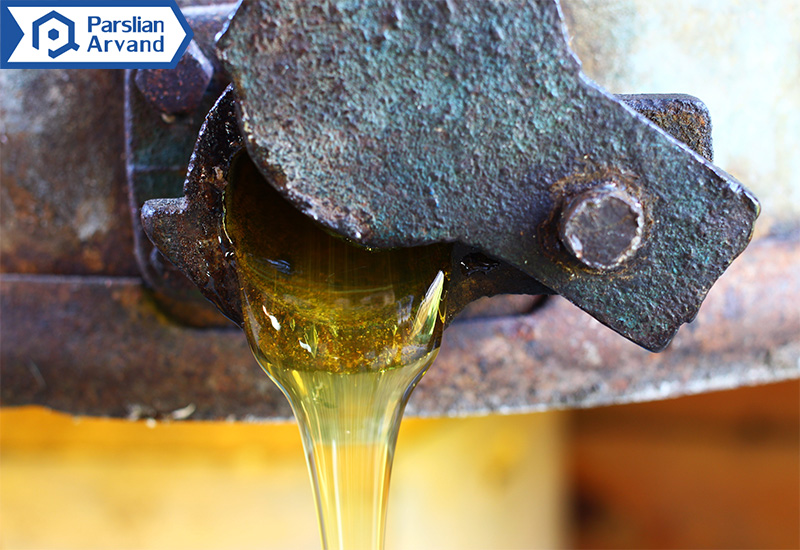
Refinery streams may contain sulfur, nitrogen, metals, olefins, and other compounds that affect emissions, stability, odor, corrosion, or catalyst performance. Hydrotreating reacts these streams with hydrogen over a catalyst.
According to the EIA glossary, hydrotreating is used for desulfurization, removal of nitrogen compounds that can deactivate catalysts, saturation of olefins, and other quality improvements.
Naphtha, kerosene, diesel, gas oil, and heavier streams may be hydrotreated under different conditions. Removed sulfur is processed through sulfur recovery facilities.
Treatment is central to modern crude oil refining because finished fuels must satisfy defined limits rather than merely fall within a broad boiling range.
Step 8: Blending, Laboratory Testing, and Release
Finished fuels are blends of several refinery streams. Gasoline may contain reformate, alkylate, isomerate, and cracked gasoline, while diesel and jet fuel may combine treated straight run and converted streams.
Blending is controlled to meet specifications for properties such as octane or cetane quality, sulfur, density, viscosity, vapor pressure, flash point, freezing point, distillation, stability, and lubricity.
EIA describes treatment and blending as the finishing stage in which refinery streams are combined according to required product properties.
Laboratory testing confirms whether the blend meets the applicable standard or contract. If a result is outside specification, the batch may require reblending, additional treatment, segregation, or investigation.
Parsbehinlab provides petroleum laboratory services for fuels, lubricants, hydrocarbon solvents, and light and heavy hydrocarbons. These services can support refinery quality control, export documentation, import assessment, supplier verification, and independent product analysis.
Why Every Refinery Produces a Different Product Mix
There is no universal output from one barrel of crude. Product yield depends on:
- Crude density, sulfur, acidity, and composition
- Refinery complexity and available conversion units
- Catalyst condition and operating severity
- Product specifications
- Seasonal and regional demand
- Economics of fuels and petrochemical feedstocks
Light crude can yield more valuable products through simpler processing, while heavier crude generally needs more conversion capacity.
EIA notes that refinery complexity determines how effectively heavy fractions can be reshaped, cracked, or treated.
Frequently Asked Questions for crude oil refining
What is crude oil refining?
Crude oil refining is the industrial separation, conversion, treatment, blending, and testing of crude oil to produce fuels, lubricants, asphalt, and chemical feedstocks.
How is crude oil refined in simple terms?
It is heated and separated by boiling range, after which heavy fractions are converted, impurities are removed, and intermediate streams are blended into finished products.
What is the first major refining operation?
After feed preparation and desalting, the first major processing unit is usually atmospheric distillation.
Is fractional distillation of crude oil enough to make finished fuel?
No. It separates boiling range fractions, but most fractions still need conversion, hydrotreating, reforming, blending, or other processing.
What is the difference between atmospheric and vacuum distillation?
Atmospheric distillation handles the initial crude feed. Vacuum distillation processes the heavy atmospheric residue at reduced pressure so valuable fractions can be recovered without excessive thermal cracking.
Why do refineries use cracking?
Cracking converts heavy, lower value molecules into lighter streams that can become gasoline, diesel, jet fuel components, and LPG.
What role does laboratory testing play?
Testing verifies incoming crude, intermediate streams, and finished products. It supports process control, troubleshooting, specification compliance, and commercial release.