
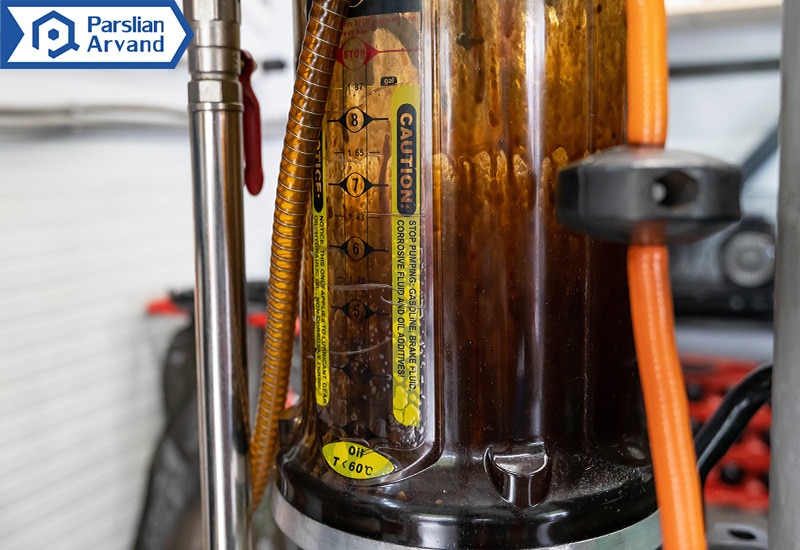
API gravity of crude oil testing provides one of the quickest ways to describe how heavy or light a crude oil is relative to water. The value is widely used in refinery planning, crude trading, cargo documentation, volume calculations, blending decisions, and laboratory characterization. A high API gravity indicates a lighter petroleum liquid, while a lower value indicates a denser material.
Pars Behin Lab provides petroleum testing, inspection, sampling, and quality control services for refineries, traders, importers, exporters, and industrial clients. Its published petroleum laboratory capabilities include density measurement and analysis of light and heavy hydrocarbons. For businesses handling crude oil, accurate density and API data can influence both technical decisions and commercial calculations. In these applications, API gravity of crude oil testing provides a standardized basis for comparing crude streams and confirming reported gravity values.
The key point is that API gravity is not a direct measure of crude quality by itself. It describes relative density. Sulfur, acidity, metals, water, sediment, viscosity, and distillation behavior must also be considered when evaluating a crude stream.
What Is the API Gravity of Crude Oil?
What is the API gravity of crude oil? API gravity is a scale developed by the American Petroleum Institute for expressing the relative density of petroleum liquids.
The U.S. Energy Information Administration defines API gravity as a measure of the specific gravity of crude oil or condensate expressed in degrees API. The higher the API value, the lighter the petroleum liquid.
“The higher the API gravity, the lighter the compound.”
Source: U.S. Energy Information Administration.
The relationship is based on specific gravity at 60°F:
API gravity = 141.5 / specific gravity at 60°F minus 131.5
Water with a specific gravity of approximately 1.000 at the reference condition corresponds to about 10 degrees API. Petroleum with an API gravity greater than 10 is lighter than water, while a liquid below 10 degrees API is denser than water.
This API gravity meaning is useful because it allows crude oils with different densities to be compared using one conventional industry scale. For this reason, API gravity of crude oil testing is routinely used when crude streams must be characterized or compared before processing or commercial transfer.
API Gravity vs Density
API gravity vs density describes the same physical characteristic in different ways.
Density is mass per unit volume, commonly reported in units such as kilograms per cubic meter. Specific gravity is a dimensionless ratio between the density of the petroleum liquid and the density of water at specified reference conditions.
API gravity converts specific gravity into an inverse scale. As density increases, API gravity decreases.
| Property | Higher value generally means | Typical expression |
|---|---|---|
| Density | Heavier liquid | kg/m³ |
| Specific gravity | Heavier liquid relative to water | Dimensionless |
| API gravity | Lighter petroleum liquid | Degrees API |
This inverse relationship is central to understanding API gravity vs density. A crude with 40 degrees API is lighter than one with 25 degrees API, even though 40 is the larger numerical value. Accurate API gravity of crude oil testing therefore depends on reliable density or hydrometer measurements and correct temperature compensation.
How Do You Calculate Specific Gravity From API?
How do you calculate specific gravity from API? The standard API equation can simply be rearranged:
Specific gravity at 60°F = 141.5 / (API gravity + 131.5)
For example, a crude oil with an API gravity of 35 gives a specific gravity of approximately 0.850.
The EIA publishes the API relationship using specific gravity at 60°F relative to water at 60°F.
The reverse calculation is equally useful. If laboratory specific gravity is known, API gravity can be calculated using the standard equation.
When asking how do you calculate specific gravity from API?, remember that temperature matters. Petroleum liquids expand and contract as temperature changes, which is why reference conditions and correction procedures are essential in custody and commercial measurements.
Standard Test Method for API Gravity of Crude Oil
The principal Standard Test Method for API Gravity of Crude oil using a glass hydrometer is ASTM D287.
The active version listed by ASTM is ASTM D287-22, titled Standard Test Method for API Gravity of Crude Petroleum and Petroleum Products, Hydrometer Method. The method covers crude petroleum and petroleum products that are normally handled as liquids and have a Reid vapor pressure of 101.325 kPa or less.
ASTM states that accurate gravity determination is necessary when measured petroleum volumes are converted to equivalent volumes at the standard temperature of 60°F, or 15.56°C.
The Standard Test Method for API Gravity of Crude oil is particularly suitable for transparent, low viscosity liquids. ASTM also permits its use with viscous or opaque materials when the required equilibration, meniscus, glass expansion, and temperature corrections are applied.
For laboratories performing API gravity of crude oil testing, following a recognized method such as ASTM D287 helps ensure that results from different samples, batches, or laboratories are based on comparable measurement conditions.
ASTM D287 Hydrometer Test Explained
The ASTM D287 hydrometer test is based on buoyancy. A calibrated glass hydrometer floats at a depth determined by the relative density of the liquid.
The procedure does not simply involve placing a hydrometer in crude oil and reading a number. Temperature and reading corrections are important.
A simplified laboratory sequence includes:
- Obtain a representative crude oil sample.
- Transfer the sample to a suitable hydrometer cylinder.
- Bring the sample and equipment to an appropriate measurement condition.
- Lower the API hydrometer into the liquid without allowing it to contact the cylinder wall.
- Allow the hydrometer and sample temperature to reach equilibrium.
- Record the hydrometer reading and sample temperature.
- Apply required corrections for the meniscus, glass expansion, calibration condition, and temperature.
- Convert the observation to API gravity at the standard reference temperature.
ASTM makes an important technical distinction: readings taken away from the reference temperature are initially uncorrected hydrometer readings rather than final density values. They must be corrected according to the prescribed petroleum measurement procedures.
This is why the ASTM D287 hydrometer test should be performed as a standardized measurement rather than a simple visual reading. Correct application of the method is especially important in API gravity of crude oil testing when the reported value will be used for commercial calculations or crude classification.
How to Test API Gravity of Crude Oil
If the question is how to test API gravity of crude oil, the first requirement is a representative sample. A precise hydrometer result cannot compensate for a sample that does not represent the tank, pipeline, vessel, or production stream.
The laboratory must then select a method appropriate to the sample properties.
For traditional hydrometer determination, ASTM D287 is commonly used. The test requires:
- A calibrated API hydrometer
- A suitable hydrometer cylinder
- Accurate temperature measurement
- Controlled sample handling
- Appropriate petroleum correction tables or calculations
- Correct meniscus observation
- Adequate temperature equilibrium
Reliable API gravity of crude oil testing begins before the hydrometer enters the sample. Sample representativeness, temperature control, instrument condition, and correct observation all influence the final reported value.
The answer to how to test API gravity of crude oil also depends on volatility and viscosity. Very volatile crude oils may require alternative sample handling or density methods designed to reduce loss of light components.
How to Test API Gravity of Crude Oil Using a Hydrometer
A common search question is how to test api gravity of crude oil using laboratory equipment. With ASTM D287, the main instrument is a calibrated glass API hydrometer.
The hydrometer is allowed to float freely in the crude sample. The depth to which it sinks corresponds to the density of the liquid. Lighter crude provides greater buoyancy and therefore a higher API reading.
However, testing the API gravity of crude oil with a hydrometer correctly also requires attention to temperature. ASTM recommends making the observation as close to the reference temperature as practical when the measurement will be used for bulk petroleum calculations. This reduces the magnitude of temperature corrections.
For opaque crude oils, the meniscus may need to be read differently from transparent liquids and corrected according to the method.

How to Check the Gravity of Oil in Commercial Operations
How to check the gravity of oil? The appropriate approach depends on whether the objective is laboratory characterization, refinery control, or custody transfer.
For routine laboratory work, a hydrometer or suitable density instrument can be used under a recognized method. In commercial measurement, the value must be tied to a representative sample and the correct temperature basis. This makes API gravity of crude oil testing particularly important where a gravity value appears in a purchase specification, cargo document, or blending calculation.
A useful workflow is:
- Confirm the crude identity and sampling point.
- Obtain a representative sample using an appropriate sampling standard.
- Select the required API gravity or density test method.
- Record sample temperature and instrument observations.
- Apply the necessary reference temperature corrections.
- Report the result with the method used.
- Compare the value with contractual or historical data.
When deciding how to check the gravity of oil?, the laboratory should also consider whether the crude contains significant water or sediment. A poorly mixed or nonrepresentative sample can distort the measured density and therefore the calculated API value.
Crude Oil Gravity Classification
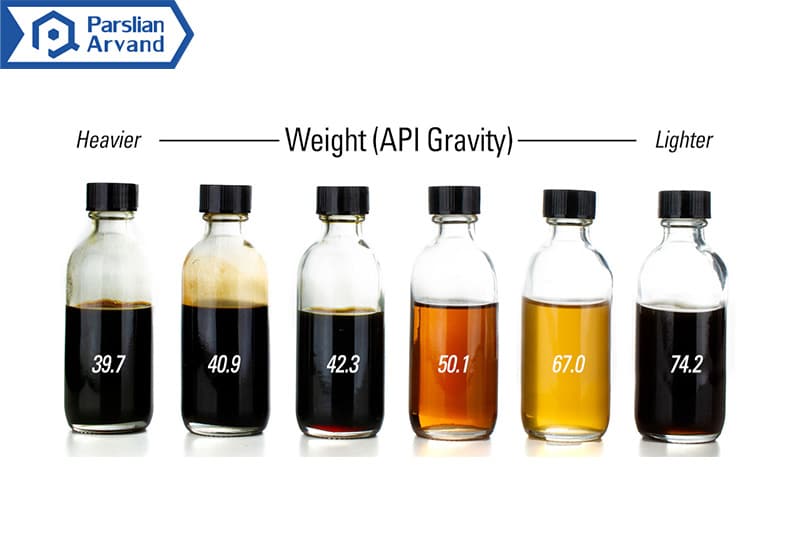
Crude oil gravity classification commonly divides crude streams into light, intermediate or medium, and heavy categories. However, there is no single classification boundary used by every company or institution.
The U.S. Energy Information Administration uses the following general categories:
| EIA crude oil gravity classification | API gravity |
|---|---|
| Light crude | Above 38° API |
| Intermediate crude | Above 22° and up to 38° API |
| Heavy crude | 22° API or below |
Other organizations and trading systems may use somewhat different cutoffs. Therefore, crude oil gravity classification should always be interpreted using the definitions stated in the relevant contract, dataset, or refinery specification. In practice, API gravity of crude oil testing supplies the measurement used to place a crude stream within whichever classification system is being applied.
Why API Gravity of Crude Oil Testing Matters
API gravity of crude oil testing has both technical and commercial importance.
- Refinery Planning
Crude gravity gives refiners a rapid indication of the overall heaviness of a feedstock. Lighter crude generally contains a larger proportion of lower boiling hydrocarbons, while heavier crude tends to require more conversion capacity to produce high-value transportation fuels.
- Trading and Pricing
API gravity is commonly included in crude oil specifications and trading documentation. Differences from the nominated crude grade may affect acceptance, valuation, or blending decisions. Reliable API gravity of crude oil testing gives buyers and sellers a standardized value for comparing the delivered crude with contractual information.
- Volume Correction
ASTM specifically identifies accurate gravity determination as necessary for converting measured petroleum volumes to volumes at the standard reference temperature.
- Blending
Refiners and terminals may use gravity data when combining crude streams to achieve target feed characteristics. API gravity of crude oil testing can therefore support blending decisions before different crude streams are combined.
- Quality Comparison
API values can be compared with historical data to help identify an unexpected change in crude composition or possible mixing.
Still, API gravity of crude oil testing cannot determine quality alone. ASTM notes that gravity is an important factor in crude oil quality, but for petroleum products it is an uncertain quality indicator when considered by itself. It becomes more useful when correlated with other properties.
API Gravity Testing and Pars Behin Lab
Pars Behin Lab publishes petroleum laboratory capabilities covering density measurement, viscosity, fuels, lubricants, hydrocarbon solvents, and light and heavy hydrocarbons. Its laboratory services are used in petroleum quality control for commercial and industrial applications.
For crude oil projects, API gravity of crude oil testing should normally be evaluated together with relevant properties such as sulfur, water, sediment, viscosity, salt, or other parameters required by the commercial specification.
Clients requiring ASTM D287 testing should confirm the current method availability, accredited scope, required sample quantity, sampling conditions, and reporting format with the laboratory before submitting material.
Frequently Asked Questions about API gravity of crude oil testing
What is the API gravity of crude oil?
What is the API gravity of crude oil? It is an industry scale expressing the relative density of crude oil in degrees API. A higher value corresponds to a lighter petroleum liquid.
How to test API gravity of crude oil?
A common method uses an API hydrometer according to ASTM D287. The sample is measured at a known temperature and the observation is corrected to the standard reference temperature. API gravity of crude oil testing should always be performed on a representative sample when the result will be used for technical or commercial decisions.
What is the API gravity meaning?
API gravity meaning refers to the heaviness or lightness of petroleum relative to water using the American Petroleum Institute scale. Higher API means lower density.
How do you calculate specific gravity from API?
Use the equation: specific gravity at 60°F equals 141.5 divided by API gravity plus 131.5.
What is ASTM D287?
ASTM D287 is the active hydrometer based Standard Test Method For API Gravity of Crude oil and liquid petroleum products within its stated scope.
What is the difference between API gravity vs density?
Density increases as API gravity decreases. Both describe how heavy a petroleum liquid is, but they use different numerical scales.
How to check the gravity of oil?
Use a recognized density or API gravity method on a representative sample, record temperature accurately, and report the value at the required reference condition.
Does higher API gravity always mean better crude oil?
No. A higher API value indicates lighter crude, not automatically better crude. Sulfur, acidity, metals, contaminants, product yield, refinery configuration, and market requirements also affect crude value.