
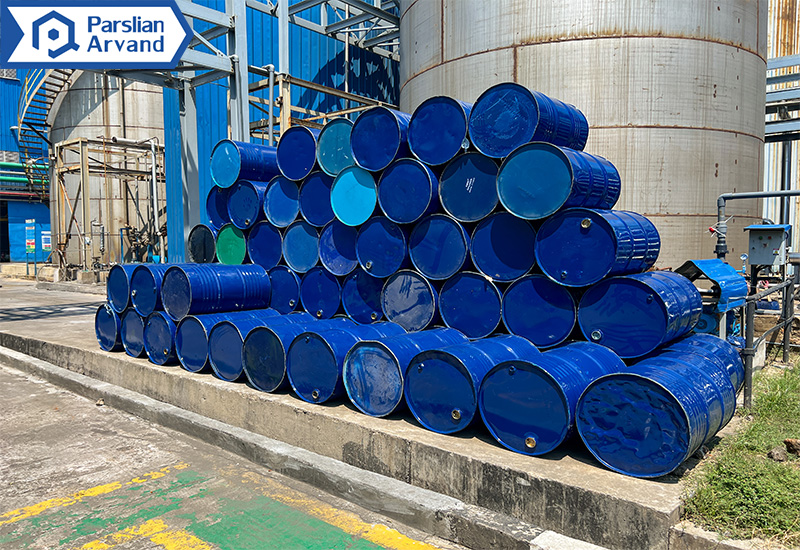
The global supply chain of oil and petroleum products is based on various criteria. One of these criteria is petroleum cargo inspection, which is essential for the survival of the business and ensuring profitability. Every cargo that moves from loading terminals to its final destination is exposed to a multitude of operational and financial risks.
Temperature fluctuations that change the volume, unwanted contamination, and quality discrepancies that can make an entire cargo worthless are among these cases, and in all of this, the only reliable and principled method is to rely on standard and accurate petroleum cargo inspection processes.
The importance of this issue doubles when we know that the pricing of crude oil and its products is based on international indices such as Brent or WTI, and the smallest calculation error can result in millions of dollars in losses. For this reason, investors, traders, refiners and shipping companies all need a common principle – independent and reputable cargo inspection services – to protect their interests from counterclaims.
International Petroleum Cargo Survey Standards
A successful petroleum cargo inspection is the result of the strict implementation of a set of international protocols developed by reference bodies such as the American Petroleum Institute (API), the International Organization for Standardization (ISO) and the American Society for Testing and Materials (ASTM). These standards provide a legal and technical framework that international arbitration courts rely on in the event of a dispute.
Key Quantitative Measurement Standards
- API MPMS (Manual of Petroleum Measurement Standards): This set is updated annually, and the chapters related to ship tank measurement (Chapter 17) and volumetric calculations are the main pillars of the inspection. API MPMS Chapter 17.12:2025, published jointly with the Energy Institute (EI), updates the systematic methods for inspecting liquid cargoes with the aim of reducing losses and pollution.
- British Petroleum Institute Standard 1544 (IP 1544): This standard overlaps with API MPMS 17.12 and provides detailed guidance for the inspection of oil and petroleum product cargoes on tankers, which is cited as the primary reference in commercial contracts.
Sampling Standards
The quality of a petroleum inspection company’s final report is entirely dependent on the quality of the initial sampling. If the sample is not representative, all subsequent tests will be invalid. The most important standards in this area are:
- ISO 3170 (currently ISO/DIS 3170:2024): Specifies manual sampling methods for liquid and semi-liquid hydrocarbons and includes techniques such as sampling from different points in the depth of the reservoir using glass or metal samplers.
- ASTM D4057 (equivalent to API MPMS Chapter 8.1): Provides complete guidelines for manual sampling of oil and petroleum products in fixed tanks, ships, and pipelines.

Step-by-step of the Oil Cargo Inspection process
The comprehensive petroleum cargo inspection operation, from the moment the inspector enters the ship or terminal until the final certificate is issued, includes delicate and calculated steps, each of which requires a high level of precision and specialized knowledge.
1.Pre-Loading & Vessel Clearance
Before any cargo transfer, the surveyor must ensure that the ship or shore tanks are clean and ready. This is done according to API MPMS Chapter 17.8, which includes visual inspection, water paste testing to detect water at the bottom of the tank, and gas testing to ensure the absence of toxic or flammable gases. The surveyor also checks all valves, pipelines, and ventilation systems to identify leaks or cross-contamination.
2.Accurate Quantity Survey
This stage is the most important part of the petroleum cargo inspection and includes the following set of operations:
- Liquid Level Measurement (Ullage / Innage): Depending on the type of tank (ship or shore), the ullage (distance of the liquid level to the top of the tank) or innage (depth of liquid from the bottom of the tank) methods are used. This measurement is made using graduated meters and copper plumbs with an accuracy of 1 mm.
- Temperature measurement: Temperature has a direct effect on density and volume. The temperature is measured at three points of the cargo (top, middle and bottom) using mercury thermometers or calibrated electronic probes to calculate the weighted average temperature (VWT).
- Water and sediment sampling (BS&W): Sampling from the bottom of the tank is required to detect water and sediment (Bottom Sediment & Water) that reduce the commercial value of the cargo. ASTM D4007 specifies centrifuge methods for measuring BS&W.
3.Petroleum Sampling Services
The specialty of petroleum sampling services is the selection of a sampling method appropriate to the type of product and the purpose of the test:
- Spot Sample: Taken from a specific depth, usually in the middle of the reservoir, and is used for quick quality checks.
- Composite Sample: A combination of several samples from different depth points that provides a more accurate representation of the entire cargo. This method is used to determine final characteristics such as density, sulfur, and distillation.
- Running Sample: Taken from the pipeline during transfer operations and is representative of the average cargo in flow.
After sampling, the samples are sealed in standard containers with anti-theft labels and sent to accredited Petroleum Laboratories.
4.Qualitative tests in the laboratory
In the laboratory, samples are subjected to numerous tests, some of the most important of which are listed in the table below.
| Quality Parameter | Standard Test Method | Commercial Importance |
| Density | ASTM D1298 / ISO 3675 | Basis for volume-to-weight conversion and pricing |
| Total Sulfur Content | ASTM D4294 (XRF) / ISO 8754 | Ensures compliance with environmental regulations (IMO 2020) |
| Flash Point | ASTM D93 / ISO 2719 | Safety during transportation and storage |
| Viscosity | ASTM D445 / ISO 3104 | Fuel performance in engines and burners |
| Water & Sediment (BS&W) | ASTM D4007 (Centrifuge) | Affects calorific value and corrosion potential |
Specialized applications of cargo inspection services in various industries
The scope of cargo inspection services goes beyond crude oil, and every industry that deals with petroleum products requires a specific type of inspection.
Crude Oil Sampling and Crude Oil Inspection
Crude oil sampling is the most sensitive area due to the diversity in the quality and physico-chemical properties of crude oil. Heavy crude oil has a high viscosity, and its sampling requires heating equipment to maintain sufficient fluidity. Also, the amount of sulfur and heavy metals such as vanadium and nickel, which are critical for refineries, must be measured with very high accuracy.
Fuel Sampling Services for Marine and Power Plant Fuels
With the implementation of the IMO 2020 regulations, which reduced the sulfur ceiling for marine fuels to 0.5%, fuel sampling services for very low sulfur fuels (VLSFO) have become a serious necessity. Sampling must be done from the ship’s feed line (MARPOL Delivered Sample), and in case of non-compliance, the ship owner will face heavy fines and even seizure. Also, in power plants that use heavy fuel oil, measuring ash and pour point is vital to prevent freezing in pipelines.
Inspection of refined petroleum products (gasoline, diesel, kerosene)
High octane gasoline requires distillation tests (ASTM D86) to ensure proper distribution of light and heavy components. Diesel must be examined for Cetane Number and Cloud Point for operation in cold climates. Each of these products has its own sampling and inspection protocol, all of which a petroleum inspection company is required to comply with.
New Technologies in Petroleum Inspection Survey
The petroleum inspection industry, like many other fields, has undergone digital and technological changes. Today, petroleum inspection surveying is no longer solely dependent on manual and visual methods, and modern tools have taken accuracy and speed to new levels.
- Automated Tallying Systems (ATGs): Modern tanks are equipped with automated gauging systems that report level, temperature, and density in real time. While these systems are not yet a replacement for human inspectors, their data is used as a reference for verifying the accuracy of manual measurements.
- Webcams and Drones: Inspecting hard-to-reach areas of ships and terminals using drones equipped with thermal and HD cameras increases safety and reduces inspection time.
- Blockchain and immutable data logging: Some leading companies are using blockchain technology to record sampling and measurement data in real time, eliminating the possibility of any tampering with reports.
- Portable Analyzers: Portable devices such as FTIR and XRF allow inspectors to measure key parameters such as sulfur and octane number on-site and initiate corrective actions immediately if there are significant discrepancies.
Practical Challenges in Oil Cargo Sampling and Inspection
Even with established standards, field operations in petroleum cargo inspection and oil sampling and petroleum cargo inspection face several challenges that only the experience and vigilance of the inspector can manage:
- Adverse weather conditions: Heavy rainfall, strong winds, and high waves at sea can cause oil level measurements to be inaccurate. Experienced inspectors prevent errors by using corrective techniques and, if necessary, stopping operations until conditions improve.
- Foaming and Emulsion: In some crude oils, the formation of foam or water-in-oil emulsions makes it difficult to determine the actual liquid level. In these cases, the use of antifoam agents or waiting for the emulsion to break before measuring is required.
- Differences in tank calibration: Each ship or shore tank has its own calibration table (Capacity Table), which may become inaccurate over time and as the physical shape of the tank changes. The inspector must ensure that these tables are up-to-date and approved by the competent authorities.
- Human error in data recording: Many commercial disputes are caused by simple mistakes in recording numbers, converting units, or incorrect copying. The use of mobile software connected to a central server and direct data entry has minimized these errors.

Guide to Choosing a Professional Petroleum Inspection Company
Given the sensitivity and complexity of petroleum cargo inspection processes, choosing an appropriate petroleum inspection company is a strategic decision that must be made with precise criteria. Below is a practical checklist for assessment:
- International accreditation: The company should be ISO/IEC 17020 (for inspection bodies) and ISO/IEC 17025 (for laboratories) certified by a reputable body such as UKAS or A2LA.
- Technical background and resume: Look at the number and variety of projects the company has completed in various areas of crude oil, products and liquefied petroleum gas. Membership in the International Federation of Inspectors (IFIA) is also an advantage. Global
- coverage: Does the company have representation in key ports around the world and can respond 24 hours a day, 7 days a week? Delays in dispatching an inspector can result in heavy demurrage costs.
- Equipment and technology: Does it use the most advanced measuring devices such as level radars, accurate thermometers (with an accuracy of 0.1 ° C) and anti-pollution samplers?
- Transparent and fast reporting: What is the delivery time of the initial report? Are the reports provided digitally and with tracking capabilities on a dedicated platform?
Conclusion
In the oil business, the only safeguard that can protect capital against quantitative and qualitative risks is relying on a transparent, standardized, and independent petroleum cargo inspection process. From the moment crude oil enters ship tanks to the delivery of refined products to refineries and power plants, all links in the supply chain depend on the accuracy of measurements, the accuracy of oil sampling, and the reliability of laboratory reports. The use of modern technologies, strict compliance with API, ISO, and ASTM standards, and the use of experienced inspectors prevent costly disputes and strengthen the trust of trading parties.
With special attention to the diverse needs of the market and relying on a team of expert specialists and the most up-to-date equipment of the Petroleum Laboratory, parsbehin lab Group has always strived to provide professional services in the field of petroleum inspection survey. The focus of this suite on accuracy, speed, and transparency has made it a reliable choice for oil and petroleum products industry players in the field of crude oil sampling and in fuel sampling services for marine and power plant fuels. For more information and expert advice, contact us.
Frequently Asked Questions for petroleum cargo inspection
Is Petroleum Cargo Inspection only for export cargo or is it also applicable for import cargo?
No, this service is necessary for both export and import cargo. In import, the buyer uses the inspection to ensure that the goods comply with the contract, and in export, the seller uses it to prove the quality and quantity of the goods shipped.
How is the inspection fee calculated, and is it possible to agree on a fixed fee?
The fee is usually calculated based on a daily rate per inspector plus travel and accommodation costs. For large and long-term projects, it is possible to negotiate a flat rate or volume discounts.
What is the solution if there is a discrepancy between the results of the seller's inspector and the buyer's inspector?
In this case, a third-party inspector approved by both parties is usually used. Also, the retained samples, which were sealed at the beginning of the operation, are sent to the reference laboratory and the final results are determined based on their analysis.
How long are the test results valid for?
The test results are only valid for the same cargo and the same time of sampling. Given that the physicochemical properties of oil change over time and under the influence of storage conditions, the results of one cargo cannot be used for another cargo.
What is the role of retained samples in arbitration?
These samples, which are kept for at least 3 to 6 months (depending on the agreement of the parties), are sent to a third-party laboratory as technical evidence in the event of a quality discrepancy, and a final opinion is issued based on their testing.
Is it possible to inspect while the ship is moving (at sea)?
Yes, on-the-move inspections are possible, but they are very complex and risky, requiring special equipment and a highly skilled team. Usually, this is only done in emergency cases and in full coordination with the ship's captain.