
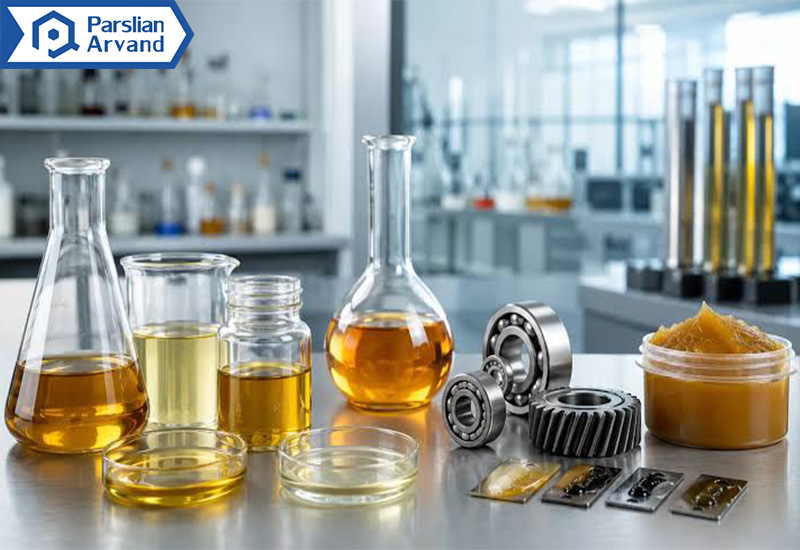
In industrial environments, the process of lubricant testing is the protector of reliability and efficiency in machines. The effectiveness of lubricants directly influences the longevity of equipment and maintenance expenses. However, ironically enough, many businesses see the testing of their lubricants as merely a reaction, not an action.
However, the testing of base oils, as well as lubricant analysis, is one of the best investments that any company with assets can make. The ASTM D5185, which is the test method for multielement determination of used and unused lubricating oils and base oils by inductively coupled plasma atomic emission spectrometry (ICP-AES), indicates that the quick screening of used oils helps reveal the presence of wear, as the tests take no more than several minutes and detectability is within low mg/kg levels.
And here lies the true value of using professional oil testing services, turning it into an asset rather than just being a technical necessity. It is precisely what Pars behin lab has been known for delivering, providing our clients with the most advanced instrumentation and technical knowledge in oil analysis laboratories.
Basis of base oil testing
Before the final product lubricant gets into your machinery, it goes through a process that starts with base oil, which is the fundamental component forming 70 to 99 percent of lubricants. Therefore, base oil testing is not only about the quality of the product but a key to validating the performance of the lubricant.
ASTM D6074 is a standard guide providing guidance on how to conduct the characterization of hydrocarbon lubricant base oils. The guide provides several physical, chemical, and toxicological tests for characterizing hydrocarbon lubricant base oils obtained by different refining operations, such as re-refining used oils and refining crude oils. The guide is specific to the hydrocarbon base oils used in making lubricants, such as automotive and industrial lubricants.
What Base Oil Testing Reveals
Testing of Base oil testing measures many essential parameters:
- Viscosity and Viscosity Index: The measure of fluidity and viscosity characteristics depending on the temperature, which is crucial for the proper choice of base oil.
- Volatility: Measure of evaporation rate under conditions of high temperatures, which influences the rate of oil loss and emissions.
- Oxidation Stability: The indicator of how resistant the base oil analysis is to chemical reactions when being used.
- Saturates, Aromatics, and Polar Compounds: Composition of base oil and the ability to work properly with additives.
- Sulfur and Nitrogen: Affect oxidation stability, corrosivity, and environmental aspects.
The standard of ASTM D6074 includes base oils whose viscosities are approximately equal to 2 mm²/s to 40 mm²/s (cSt) at 100 °C. This interval of viscosity includes practically all the existing base oils for automotive and industrial lubricants.
Characterization of hydrocarbon lubricant base oils represents the first step in better describing important parameters affecting lubricant performance and safe handling.
Comprehensive Lubricating Oil Testing
In lubricating oil testing, we referring to a multidimensional analytical approach that evaluates every aspect of oil quality, performance, and condition. Modern lubricant quality analysis uses sophisticated techniques to provide a complete picture of oil health.
1. Elemental Analysis by ICP-AES (ASTM D5185)
The workhorse of any serious lubricant testing laboratory is ICP-AES (Inductively Coupled Plasma Atomic Emission Spectrometry). ASTM D5185 enables the rapid determination of 22 elements in used and unused lubricating oils and base oils. This test examines several categories.
| Element Category | Examples | What It Indicates |
| Additive Elements | Zn, P, Ca, Mg, Mo | Correct oil formulation, additive depletion |
| Wear Metals | Fe, Cu, Cr, Pb, Al, Sn | Mechanical wear, component degradation |
| Contaminants | Si, Na, K, B | Dirt ingress, coolant leakage, seal failure |
The significance of metal analysis in used lubricating oils is well-documented.
As ASTM D5185 notes:
“This test method can be used to monitor equipment condition and define when corrective actions are needed.”
For instance, a marked increase in boron, sodium, or potassium levels can be indicative of contamination as a result of coolant leakage in the equipment. Similarly, significant differences between additive element concentrations and their specifications can indicate that the incorrect oil is being used.
2. Condition Monitoring by FTIR Spectroscopy (ASTM D7414)
Fourier Transform Infrared (FT-IR) spectrometry has revolutionized the lubricating oil laboratory by enabling rapid, non-destructive condition monitoring. ASTM D7414 specifically addresses the monitoring of oxidation in in-service petroleum and hydrocarbon-based lubricants.
Petroleum and hydrocarbon-based lubricants react with oxygen in the air to form various chemical species, including aldehydes, ketones, esters, and carboxylic acids. FTIR spectroscopy detects these oxidation products quickly and reliably. The test method is designed as a fast, simple spectroscopic check for monitoring oxidation to help diagnose the operational condition of the machine based on measuring the level of oxidation in the oil. In addition to oxidation, modern FTIR analysis can detect:
- Nitration (ASTM D7624)
- Sulfation
- Soot content
- Water contamination
- Glycol (coolant) ingress
- Depletion of antiwear additives (ZDDP)
3. Particle Count and Cleanliness (ISO 4406)
Industrial lubricant testing places enormous emphasis on cleanliness and for good reason. Contaminant particles are the primary cause of component wear, leading to reduced equipment life and unexpected failures.
ISO 4406 provides the internationally recognized standard for reporting oil cleanliness. The standard uses three overlapping size categories to rate particles: >4 microns, >6 microns, and >14 microns. The number of particles in each size range is measured per milliliter of oil sample and graded according to a comparison table.
Studies have demonstrated that reducing particles larger than 10 µm from 1000/ml to 100/ml results in a five-fold increase in expected machinery life. This is why professional industrial oil testing always includes particle count as a core parameter.

4. Transformer Oil Testing
Transformer oil testing represents a specialized but critical branch of lubricant analysis. Power transformers are among the most expensive and essential assets in any electrical grid, and their insulating oil provides both electrical insulation and cooling.
The most frequently performed method for monitoring transformers is Dissolved Gas Analysis (DGA). Over time, thermal and electrical stresses cause the formation of various gases dissolved within the oil. ASTM D3612 provides the standard test method for dissolved gas analysis in transformer oil by gas chromatography, available in multiple methods including vacuum extraction (Method A), direct oil injection (Method B), and headspace sampling (Method C). Key diagnostic gases include:
- Hydrogen (H₂): Indicates partial discharge or corona
- Methane (CH₄), Ethane (C₂H₆), Ethylene (C₂H₄): Thermal faults
- Acetylene (C₂H₂): High-energy arcing
- Carbon Monoxide (CO) and Carbon Dioxide (CO₂): Cellulose insulation degradation
The analysis of dissolved gases enables evaluation of defects in electrical equipment to initiate countermeasures in good time.
Used Oil Analysis
the most actionable form of lubricant testing is used oil analysis. By examining oil that has been in service, we can peer directly into the operating condition of the equipment it protects.
The Predictive Maintenance Advantage
Regular used oil analysis enables condition monitoring. This approach delivers substantial benefits:
- Reduced downtime: Failures are anticipated and scheduled
- Extended equipment life: Problems are caught early
- Optimized oil drain intervals: Oil is changed only when necessary
- Lower maintenance costs: Unnecessary interventions are eliminated
Key Parameters in Used Oil Analysis
Comprehensive lubricating oil laboratory analysis of used oil typically includes:
- Viscosity (ASTM D445): The single most important property—changes indicate oil degradation or contamination
- Total Acid Number (TAN) (ASTM D974): Measures acidic constituents formed during oxidation
- Total Base Number (TBN) (ASTM D2896): Indicates remaining reserve alkalinity to neutralize acids
- Water Content (ASTM D6304): Even small amounts can cause corrosion and additive depletion
- Wear Metals (ASTM D5185): Identifies which components are wearing and how rapidly
- Oxidation and Nitration (ASTM D7414, ASTM D7624): Tracks oil degradation
- Particle Count (ISO 4406): Monitors contamination levels
- Flash Point (ASTM D3278): Indicates fuel dilution or volatile contamination

Industrial Lubricant Testing
Different industries face different challenges, and industrial lubricant testing must be adapted accordingly. At parsbehin lab, the lubricant testing laboratory serves clients across diverse sectors:
1.Hydraulic Systems
Hydraulic fluids require exceptional cleanliness and water separation properties. Testing focuses on particle count (ISO 4406), water content, viscosity, and antiwear additive depletion.
2.Gearboxes and Compressors
These applications generate high temperatures and pressures. Testing emphasizes oxidation stability, viscosity, and wear metal analysis to detect pitting, scuffing, and fatigue.
3.Turbines (Gas and Steam)
Turbine oils must resist oxidation and maintain demulsibility over long service intervals. Lubricant quality analysis for turbines includes RULER (remaining useful life evaluation), FTIR oxidation monitoring, and foam tendency testing.
4.Metalworking Fluids
These complex formulations require testing for pH, concentration, bacterial contamination, and corrosion inhibition.
5.Marine and Off-Highway
Harsh environments demand robust lubricating oil testing that includes fuel dilution, soot handling, and TBN retention.
Conclusion
In today’s industrial environment, lubricant testing is essential. Whether you are looking to verify the quality of incoming base oils, monitor the condition of in-service lubricants, or diagnose the root cause of equipment failure, professional lubricant testing services provide the data you need to make informed decisions.
ASTM standards such as D5185, D6074, D7414, and D3612 provide robust, validated methods for base oil analysis, lubricating oil laboratory, and industrial lubricant testing. The business case is equally compelling: reduced downtime, extended equipment life, optimized maintenance costs, and improved operational reliability.
At parsbehin lab, our complete oil analysis laboratory is dedicated to delivering the highest standard of lubricant testing excellence. We combine cutting-edge instrumentation with deep technical expertise to provide insights that protect your assets and enhance your bottom line.
Don’t wait for a failure to demonstrate the value of lubricant quality analysis. Don’t waste time on trial and error to demonstrate the value of lubricant quality analysis. Contact our experts at parsbehinlab today to learn how professional lubricant testing laboratory services can transform your maintenance program from reactive to predictive, from costly to cost-effective, from uncertain to certain.
For more information about our comprehensive testing capabilities, visit our Petroleum Laboratories page or contact our technical team to discuss your specific requirements. Your equipment deserves nothing less than the best lubricant testing services available and at parsbehin lab, that is exactly what we deliver.
Frequently Asked Questions for lubricant testing
How often should I conduct lubricant testing?
The frequency depends on equipment criticality, operating conditions, and historical data. For critical assets, monthly or quarterly sampling is common. For less critical equipment, semi-annual or annual testing may suffice. Your lubricant testing laboratory can help establish an optimal sampling schedule based on your specific situation.
What is the difference between base oil testing and finished lubricant testing?
Base oil testing evaluates the raw hydrocarbon stock before additives are blended in. It focuses on fundamental properties like viscosity, volatility, and chemical composition. Finished lubricant testing evaluates the final product after additives have been incorporated and assesses both base oil analysis and additive package performance.
What does a typical used oil analysis report include?
A comprehensive report includes: (1) measured values for all parameters, (2) comparison to new oil specifications and previous samples, (3) trend analysis showing changes over time, (4) interpretation of results, (5) specific recommendations for action, and (6) severity ratings (normal, caution, critical) for each parameter.
How is transformer oil testing different from other lubricant testing?
Transformer oil testing focuses on electrical properties (dielectric strength, resistivity), dissolved gas analysis for fault detection, and moisture content. Unlike engine or hydraulic oils, transformer oil is primarily an insulator and coolant rather than a friction reducer, so the test parameters and their interpretation are quite different.
Can lubricant testing really prevent equipment failures?
Yes. By detecting wear metals, contaminants, and oil degradation before they reach critical levels, used oil analysis provides early warning of developing problems. ASTM D5185 explicitly states that this test method “can be used to monitor equipment condition and define when corrective actions are needed”. This enables maintenance to be performed on condition rather than on a fixed schedule, preventing unexpected failures.
How do I choose the right lubricant testing laboratory?
Look for: (1) accreditation to relevant standards, (2) participation in proficiency testing programs, (3) a comprehensive range of test methods, (4) experienced technical staff who can interpret results, (5) fast turnaround times, and (6) clear, actionable reporting. Parslian Arvand meets all these criteria and more.